The evidence-backed preconception checklist
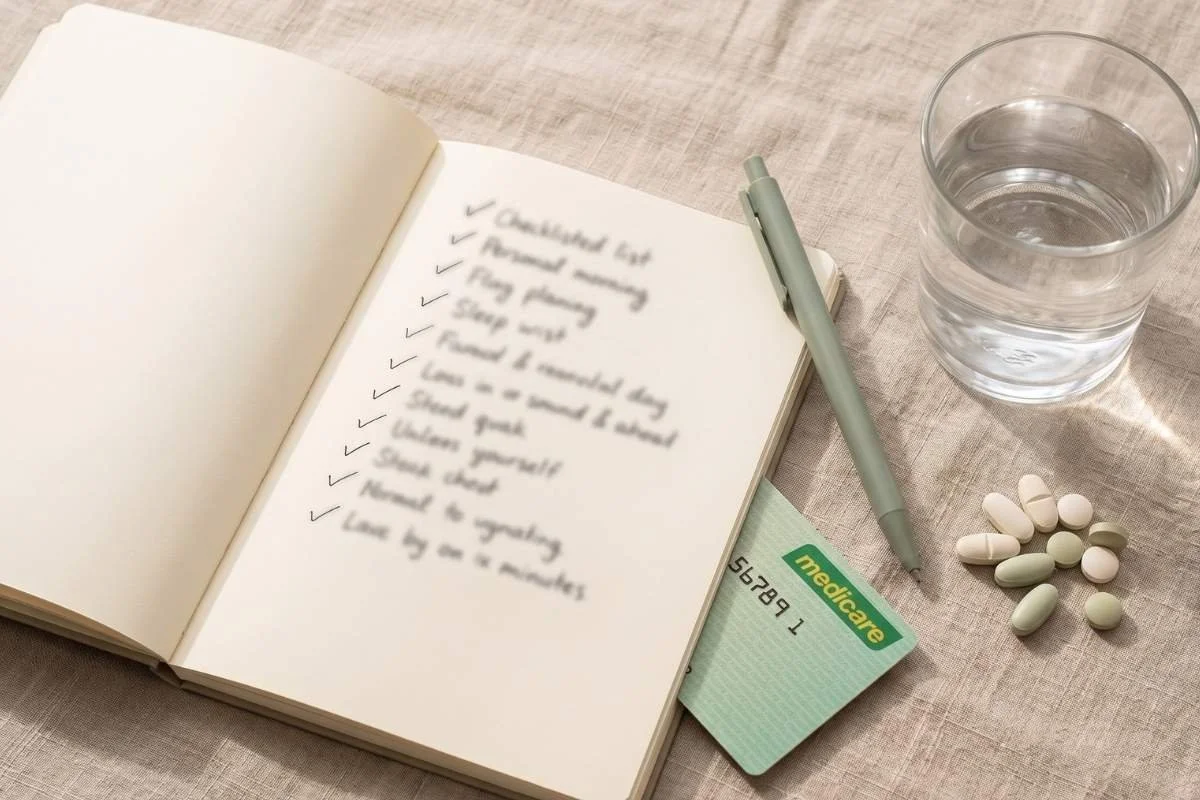
If you are planning a pregnancy, the three months before you start trying matter more than most people realise. The short version: start folate and iodine now, ask your GP for preconception blood tests and Medicare-funded carrier screening, and check your vaccination status early, because two vaccines come with a waiting period.
This guide walks through each step, what the evidence says, and exactly what to ask for.
The checklist at a glance
Here is the full checklist. Everything on it is explained below, and each item links to a detailed guide.
Three months before trying:
Book a preconception visit with your GP
Start a daily folic acid supplement (500 micrograms)
Start a daily iodine supplement (150 micrograms)
Check your immunity to rubella and chickenpox, and vaccinate if needed
Ask about reproductive genetic carrier screening
Review any regular medications with your GP
One to two months before trying:
Ask for preconception blood tests, including ferritin
Check your cervical screening is up to date
Stop drinking alcohol if you have not already
None of this needs to be perfect. If you are already pregnant and did none of it, most of these steps still have value at your first antenatal visit.
The supplements to start before you conceive
Two supplements have strong evidence behind them before pregnancy: folic acid and iodine. Most combined prenatal vitamins sold in Australia contain both, so this can be one tablet, not two. The details are in our full guide to folate and iodine before pregnancy.
How much folate do I need before pregnancy?
Australian guidance recommends 500 micrograms of folic acid daily, starting at least one month before conception, and ideally three, then continuing through the first three months of pregnancy.¹
The reason for starting early is timing. Folate reduces the risk of neural tube defects, and the neural tube closes by about six weeks of pregnancy, often before you know you are pregnant. Starting the supplement after a positive test misses part of the window it is designed to cover.
Some women need a higher dose of 5 milligrams daily, prescribed by a GP. This applies if you have had a previous pregnancy affected by a neural tube defect, take certain epilepsy medications, or have diabetes or a BMI in the higher range.¹
If you are unsure which group you fall into, this is a one-question conversation at your preconception GP visit.
Do I need an iodine supplement before pregnancy?
The NHMRC recommends a 150 microgram iodine supplement daily for women who are pregnant, breastfeeding or considering pregnancy.²
Iodine is the raw material your thyroid uses to make thyroid hormone, which drives your baby's early brain development. Australian soils are low in iodine, so food alone is often not enough to meet the higher demands of pregnancy, even with iodised salt in bread.²
The one exception is women with a pre-existing thyroid condition. If that is you, do not start iodine on your own. Ask your GP or endocrinologist first, because extra iodine can affect how some thyroid conditions behave.²
For everyone else, a standard Australian prenatal vitamin containing 150 micrograms covers this without a separate tablet.
The tests to ask your GP about
This is the part of preconception care most women never hear about. All of it is available through a standard GP visit, and most of it is covered by Medicare.
What blood tests should I ask for before trying?
A preconception blood panel typically covers rubella and chickenpox immunity, a full blood count, ferritin, blood group and antibody status, plus screening for hepatitis B, hepatitis C, HIV and syphilis.¹
These are the same tests you would be given at your first antenatal visit. Doing them before you conceive means anything that needs fixing, like low iron or missing rubella immunity, gets found while you can still act on it easily.
Depending on your history, your GP may add vitamin D, thyroid function or diabetes screening. These are not routine for everyone, and that is appropriate, because testing should follow risk rather than habit.
We cover what each test means, and the exact wording to use with your GP, in our guide to preconception blood tests.
What is reproductive genetic carrier screening?
Since 1 November 2023, Medicare has funded reproductive genetic carrier screening for three conditions: cystic fibrosis, spinal muscular atrophy and fragile X syndrome. The test is a once-per-lifetime blood or saliva sample, requested by your GP.³
The case for doing it is stronger than most people expect. In an Australian study of over 12,000 people screened for these three conditions, about one in 20 was a carrier, and 88% of carriers had no family history of the condition.⁴ A clear family tree does not rule you out, because carriers are healthy and usually have no idea.
The reason to test before pregnancy rather than during is options. If you and your partner are both carriers for the same condition, knowing beforehand gives you choices, including IVF with embryo testing, that are harder to consider once you are already pregnant.
Our full guide to carrier screening in Australia explains how the three-gene test works and what happens if you get a positive result.
Why does ferritin matter before you conceive?
Ferritin is a measure of your iron stores, and pregnancy draws those stores down hard. Your iron requirement rises from 18 milligrams a day before pregnancy to 27 milligrams a day during it.⁵
That is why entering pregnancy with low stores matters. If your ferritin is already low when you conceive, the rising demands of pregnancy make iron deficiency much harder to avoid, and correcting iron takes months rather than weeks.
Low ferritin is common in Australian women of reproductive age, particularly if you have heavy periods, donate blood or eat little red meat. Many women have never had it measured, because a standard full blood count does not include it.
Ask for ferritin by name in your preconception bloods. We explain what your number means, and what to do about a low one, in our guide to ferritin before pregnancy.
Planning a pregnancy?
Each week I create bonus content covering interesting pieces of research worth knowing before and during pregnancy. These are exclusive tips sent only to my email subscribers. Interested in joining?
Vaccinations before pregnancy: check these early
Vaccination is the checklist item with a hard deadline attached, which is why it sits in the three-month column rather than the one-month column. Check out my article on vaccinations before pregnancy.
Which vaccines do I need before pregnancy?
Two vaccines need to be sorted before you conceive: measles-mumps-rubella (MMR) and chickenpox (varicella). Both are live vaccines, they are not given during pregnancy, and after either one the Australian Immunisation Handbook advises avoiding pregnancy for 28 days.⁶
The 28-day window is precautionary. It reflects a theoretical risk rather than observed harm, and no cases of vaccine-caused congenital varicella have been reported.⁶ Even so, the practical advice stands: get these done early, not the month you start trying.
a you do not know whether you are immune, a simple blood test checks your rubella and varicella antibody levels, and your GP can vaccinate based on the result.⁶
Whooping cough and influenza vaccines work differently. They are deliberately given during pregnancy to pass protection to your baby, so they belong on your pregnancy checklist, not this one. The details are in our guide to vaccinations before pregnancy.
The GP visit that ties it all together
A single preconception appointment covers almost everything on this list. Book a long consultation and bring your questions written down.
Beyond ordering tests, this is the visit to review any regular medications, because some need adjusting or swapping before pregnancy, and stopping suddenly on your own can be riskier than the medication itself. For specific medication questions, MotherSafe, the NSW obstetric medicines information service, takes calls from anywhere in Australia.
It is also the moment to check your cervical screening is current, since screening is easier to do before pregnancy than during it.
On alcohol, the NHMRC guidance is clear: if you are planning a pregnancy, not drinking is the safest option, because a safe threshold in early pregnancy has not been established.⁷ The same visit is the best time to ask for support with quitting smoking if you need it.
What this means for you
Start with two actions this week: begin a prenatal vitamin containing 500 micrograms of folic acid and 150 micrograms of iodine, and book a long GP appointment.
At that appointment, ask for four things: preconception blood tests including ferritin, a check of your rubella and chickenpox immunity, reproductive genetic carrier screening, and a review of any medications you take.
That is the whole foundation. None of it requires a specialist, almost all of it is covered by Medicare, and most of it takes one visit and one blood draw. Your GP can tailor the rest to your own history, which is exactly what the preconception visit is for.
References
- Australian Government Department of Health and Aged Care. Clinical practice guidelines: pregnancy care. Canberra: Department of Health and Aged Care; 2020.
- National Health and Medical Research Council. NHMRC public statement: iodine supplementation for pregnant and breastfeeding women. Canberra: NHMRC; 2010.
- Australian Government Department of Health and Aged Care. Reproductive carrier testing for cystic fibrosis, spinal muscular atrophy and fragile X syndrome (MBS items 73451 and 73452), fact sheet. Canberra: MBS Online; 2023.
- Archibald AD, Smith MJ, Bruce T, et al. Reproductive genetic carrier screening for cystic fibrosis, fragile X syndrome, and spinal muscular atrophy in Australia: outcomes of 12,000 tests. Genet Med. 2018;20(5):513-523.
- National Health and Medical Research Council. Nutrient reference values for Australia and New Zealand: iron. Canberra: NHMRC; 2006.
- Australian Technical Advisory Group on Immunisation. Vaccination for women who are planning pregnancy, pregnant or breastfeeding. In: Australian immunisation handbook. Canberra: Department of Health and Aged Care.
- National Health and Medical Research Council. Australian guidelines to reduce health risks from drinking alcohol. Canberra: NHMRC; 2020.
Written by Bella · BBiomedSc, MEpi · Clinical epidemiologist
I read pregnancy research so you do not have to. Australian evidence, no scare tactics. More about me
Published: 17 July 2026 · Last reviewed: 17 July 2026
How I review research: Editorial policy
Educational only, not medical advice. Full disclaimer
This article is for educational purposes only and does not constitute medical advice. Research findings describe patterns across populations and may not apply to you. Always discuss your own situation with your GP, midwife or obstetrician.