Folate and iodine before pregnancy: how much, and when to start
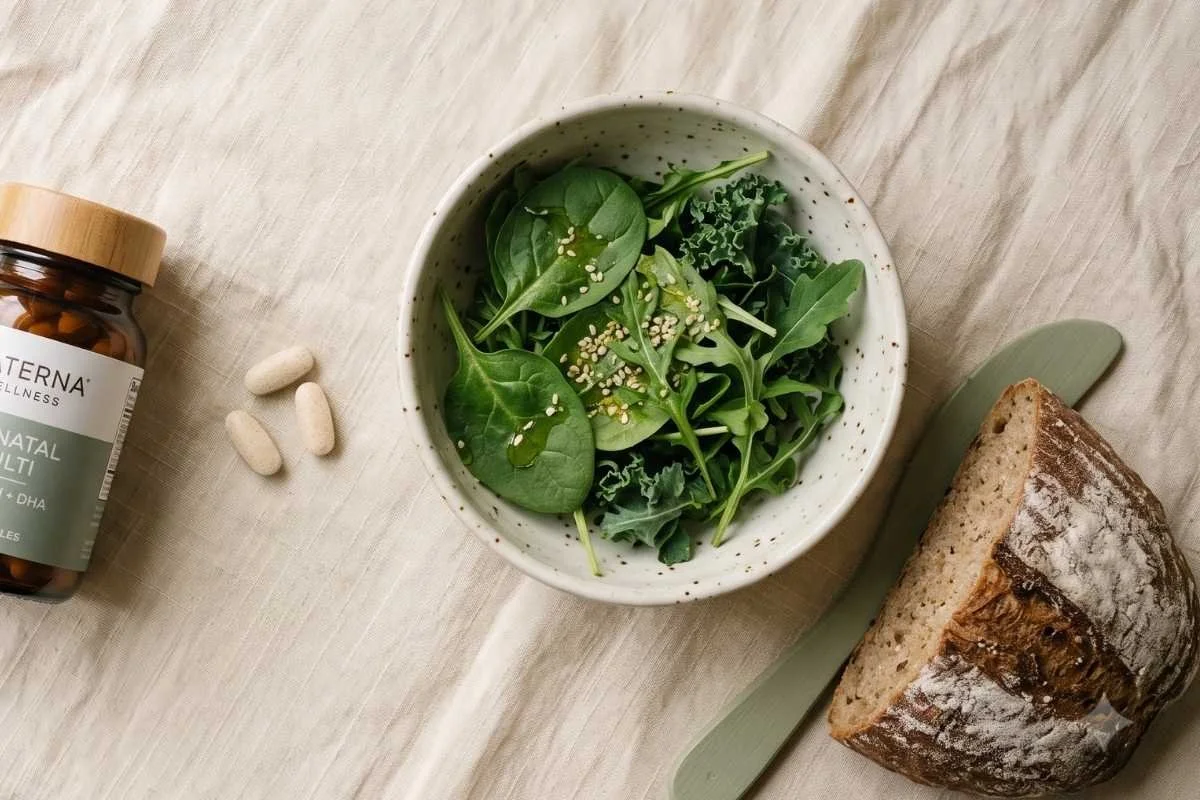
Two supplements have strong enough evidence to start before you conceive: folic acid and iodine. The short version is 500 micrograms of folic acid and 150 micrograms of iodine daily, ideally begun three months before you start trying.
Most combined prenatal vitamins sold in Australia contain both at these doses, so for most women this is one tablet, not two. This guide explains the numbers, the timing and the two exceptions.
Why these two, and why before you conceive
Folate and iodine are the two nutrients where the demand rises before you would know you are pregnant. Folate builds your baby's neural tube, which closes by about four weeks after conception, often before a positive test.¹ Iodine feeds the thyroid hormone that drives early brain development, and that demand climbs from the first weeks.²
Starting early is the entire point. A supplement begun after a missed period misses part of the window it is designed to cover. This is why both sit in the three-month column of our preconception checklist rather than something to sort out once you see two lines.
Neither needs to be perfect. If you are reading this already pregnant, starting today still has value, and your GP or midwife can pick it up from there.
Folate before pregnancy
How much folic acid do I need before pregnancy?
Australian guidance recommends 500 micrograms of folic acid daily for at least one month before conception, ideally three, continuing through the first three months of pregnancy.¹
Folate lowers the risk of neural tube defects, which are conditions like spina bifida where the spine or brain does not close properly in early development. The evidence for this is strong and long established, which is why folic acid is added to bread flour across Australia as a baseline.¹
The 500 microgram figure is the standard dose for most women, and it is the strength sold in Australian prenatal vitamins. You do not need to hunt for a higher amount unless you fall into one of the specific groups below. Taking more than recommended without a reason offers no added benefit.
Who needs the higher 5 milligram dose?
Some women need 5 milligrams of folic acid daily, which is ten times the standard dose and available only on prescription. This applies if you have had a previous pregnancy affected by a neural tube defect, have a close family history of one, take certain epilepsy medications, have diabetes that predates pregnancy, or have a BMI in the higher range.¹
If any of these describe you, this is a short conversation at your preconception GP visit, and the higher dose is started the same way, just earlier and stronger. Do not self-prescribe it, because the right dose depends on your specific history.
For everyone outside these groups, 500 micrograms is the correct amount, and more is not better.
When should I start taking folate?
Start folic acid at least one month before you begin trying to conceive, and ideally three.¹
The timing matters because the neural tube closes very early, by around week six of pregnancy counted from your last period, which is only about four weeks after conception.¹ For many women that is around the time a period is late, so the protective window is already closing by the time a test turns positive.
Building up your folate levels before conception means the supply is there from day one. If your cycle is irregular or you are not tracking closely, starting early removes the guesswork.
Planning a pregnancy?
Each week I create bonus content covering interesting pieces of research worth knowing before and during pregnancy. These are exclusive tips sent only to my email subscribers. Interested in joining?
Iodine before pregnancy
How much iodine do I need before pregnancy?
The NHMRC recommends a 150 microgram iodine supplement daily for all women who are pregnant, breastfeeding or considering pregnancy.²
Iodine is the raw material your thyroid uses to make thyroid hormone, and in early pregnancy that hormone drives your baby's brain and nervous system development.² The requirement rises in pregnancy beyond what most Australian diets reliably provide.
Australian soils are low in iodine, so the amount in food is variable. Bread has had iodised salt added by law since 2009, which helped, but it does not fully cover the higher demand of pregnancy on its own.³ A standard prenatal vitamin containing 150 micrograms closes that gap without a separate tablet.
Who should check with their doctor first?
If you have a pre-existing thyroid condition, do not start an iodine supplement on your own. Speak to your GP or endocrinologist first.²
This is the one genuine exception to the iodine advice. In conditions like an overactive or autoimmune thyroid, extra iodine can affect how the condition behaves, so the decision needs to account for your diagnosis and any medication you take.²
For everyone without a thyroid condition, the 150 microgram supplement is straightforward and is built into Australian prenatal vitamins. If you are unsure whether a past thyroid result counts, raise it at the same preconception appointment where you organise your preconception blood tests.
Can I get enough from food alone?
For most women, food alone does not reliably cover folate and iodine in the lead-up to pregnancy, which is why supplements are recommended rather than diet changes.¹˒²
Folate is found in leafy greens, legumes and fortified bread, and these are worth eating, but the amount and consistency needed to protect against neural tube defects is hard to guarantee from food. The supplement is the reliable route.¹
Iodine sits mainly in dairy, seafood and iodised salt, and intake swings with what you happen to eat that week.³ Because the pregnancy requirement is higher and steadier than a typical diet delivers, the NHMRC recommends the supplement on top of a normal diet, not instead of it.²
A good diet supports both. It just is not a substitute for the two supplements here.
What this means for you
Start a daily prenatal vitamin that contains 500 micrograms of folic acid and 150 micrograms of iodine. One combined tablet usually covers both, so check the label rather than buying two products.
Begin at least a month before you start trying, and three months is better. If you have had a pregnancy affected by a neural tube defect, take epilepsy medication, have diabetes, have a higher BMI or a family history, ask your GP about the prescription 5 milligram folic acid dose. If you have a thyroid condition, ask before starting iodine.
Everything else about getting pregnancy-ready sits in one place in our Australian preconception checklist.
References
- Australian Government Department of Health and Aged Care. Clinical practice guidelines: pregnancy care. Canberra: Department of Health and Aged Care; 2020.
- National Health and Medical Research Council. NHMRC public statement: iodine supplementation for pregnant and breastfeeding women. Canberra: NHMRC; 2010.
- Food Standards Australia New Zealand. Iodine fortification. Canberra: FSANZ; 2016.
Written by Bella · BBiomedSc, MEpi · Clinical epidemiologist
I read pregnancy research so you do not have to. Australian evidence, no scare tactics. More about me
Published: 17 July 2026 · Last reviewed: 17 July 2026
How I review research: Editorial policy
Educational only, not medical advice. Full disclaimer
This article is for educational purposes only and does not constitute medical advice. Research findings describe patterns across populations and may not apply to you. Always discuss your own situation with your GP, midwife or obstetrician.