AMH is not a fertility score: what a low result really means
An AMH test counts the eggs you have left. It does not grade their quality, and it does not predict your chance of falling pregnant naturally. If your result has come back low and you are frightened, please read on...
AMH is one number on the standard work-up we walked through in how to read your fertility test results. This is the deep dive, because no other result on that form causes as much unnecessary grief as this one.
What does an AMH test actually measure?
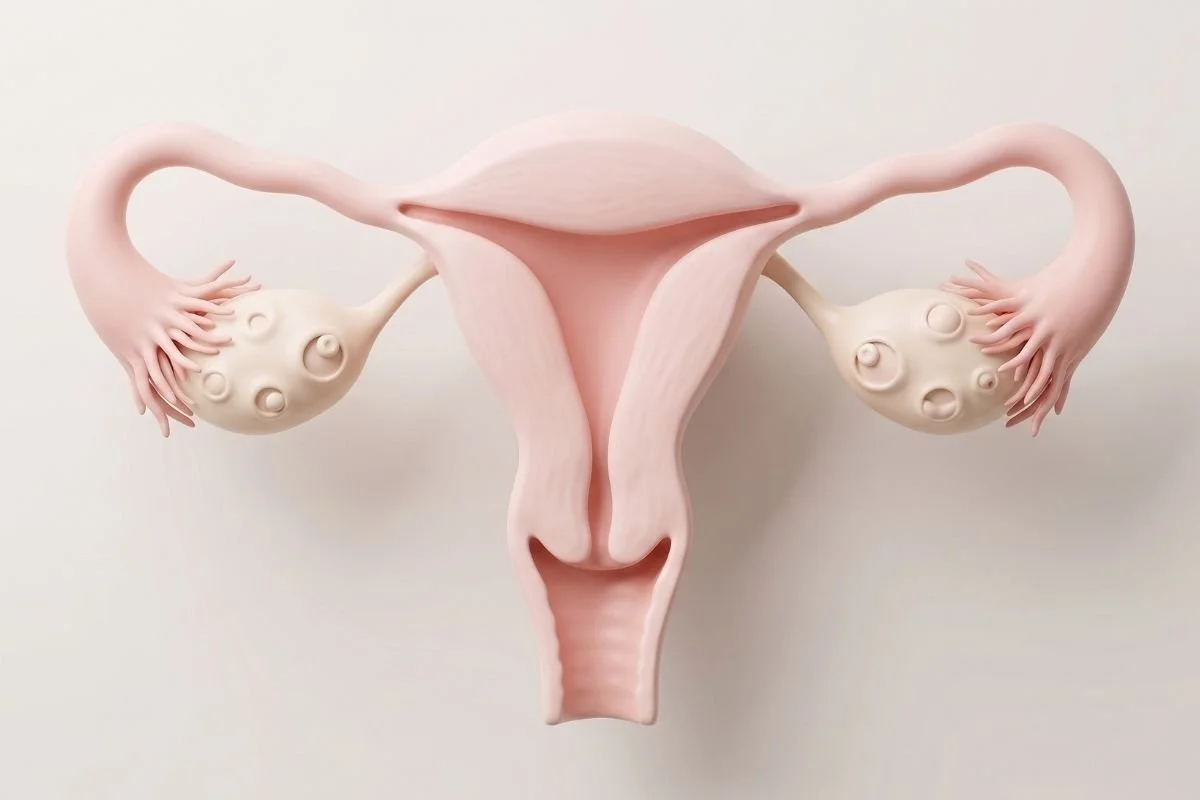
AMH, anti-Müllerian hormone, is made by the small follicles growing in your ovaries, so your blood level reflects roughly how many eggs remain in reserve.¹
Each of those follicles holds one egg. More small follicles means more AMH in your blood, which is why the level tracks the size of your egg supply. It stays fairly steady across the menstrual cycle, so it can be drawn on any day, and a good report gives your result as a centile for your age rather than a raw number alone.¹
In Australia the test is often marketed as the egg timer test, and that nickname is doing a lot of misleading work. A timer implies it can tell you how long you have. It cannot. It is a rough count of what is in the queue, and it says nothing about the quality of any egg in it.
A count is not a forecast. The rest of this article is about what that means in practice.
What a low AMH result does and does not mean
Each question below is one your result cannot answer on its own, so here is what the evidence says about each.
Can a low AMH predict my chance of getting pregnant?
No. Women with low AMH conceive at the same rate as women with normal AMH, at least through their 30s and early 40s.²
The key evidence is a prospective cohort study published in JAMA that followed 981 women aged 30 to 44 with no history of infertility, all within their first three months of trying.² Women with low AMH were no less likely to conceive over six or 12 cycles than women with normal values, and the authors concluded the test should not be used to assess natural fertility.² As a cohort study it can only show association rather than cause, and what it found was no association at all.
The reason makes sense once you know what the test measures. Conceiving in any given month depends on the single egg released that cycle and its quality, which tracks your age, not on the size of the queue behind it.¹ No blood test measures egg quality, and we cover what the evidence says about influencing it in CoQ10 and egg quality.
What is an AMH test actually useful for?
AMH is a good test when the question is how your ovaries will respond to stimulation in IVF or egg freezing.³
In that setting the count is exactly what matters, because stimulation medications work on the pool of small follicles that AMH reflects. A low result predicts fewer eggs collected, and a high result predicts an excessive response that needs careful medication dosing to keep you safe.³ Specialists also use it to set realistic expectations before egg freezing, and to plan care before chemotherapy or ovarian surgery.¹
So the test is not useless. It is specific. It answers a question about treatment response well.
Does a low AMH mean early menopause?
A low AMH cannot tell you when menopause will arrive with any useful precision.⁴
This surprises people, because predicting menopause sounds like exactly what an egg count should do. In a prospective cohort of healthy women with regular cycles, AMH did relate to the timing of menopause, but the prediction intervals were so broad that no useful individual forecast could be made, unusually early or late menopause could not be predicted at all, and the predictive value fell as women got older.⁴
So a low result shifts probabilities slightly. It does not give you a date, and it cannot diagnose premature menopause on its own. If your periods are changing and you are worried, that is a conversation for your GP, because the diagnosis rests on your cycle history and symptoms rather than on this number.
Why is my AMH low if I am on the pill?
Hormonal contraception suppresses AMH, so a result taken on the pill reads below your true baseline.⁵
In a population study of 42,684 women, combined pill users had AMH values around 17% lower on average than women cycling naturally, and lower values were also seen with the implant, the vaginal ring and the progestogen-only pill.⁵ Duration of use was not associated with lower values, which fits suppression rather than damage: the pill is not using up your eggs.⁵
Two calibration notes. This was a cross-sectional study, so it shows patterns rather than proof of mechanism, and the data came from a company that sells hormone tests, which the paper discloses. If your result was taken on contraception and it is feeding into a real decision, ask your GP whether and when a retest makes sense.
Should I have an AMH test just to check my fertility?
AMH testing is not recommended as a routine check of your fertility, and in Australia it generally attracts no Medicare rebate when ordered for that reason.¹˒⁶
That has not stopped the test being sold to women it cannot help. In an Australian population survey of 1,773 women, 7% had already had an AMH test, and around one in three of those had it for reasons the evidence does not support, such as gauging their chance of conceiving or simple curiosity.⁷ A separate analysis of Australian and New Zealand fertility clinic websites found many promoted the test well beyond what the evidence shows it can do.⁸
If you are trying to conceive and want useful information, a better starting point is the standard work-up your GP can order, beginning with preconception blood tests. Those results change decisions. A recreational AMH result mostly changes your stress levels.
Planning a pregnancy?
Each week I create bonus content covering interesting pieces of research worth knowing before and during pregnancy. These are exclusive tips sent only to my email subscribers. Interested in joining?
What this means for you
Before any AMH test, ask one question: what decision would this result change?
If the answer involves IVF, egg freezing or treatment before chemotherapy or ovarian surgery, the test has a real job to do. If the answer is that you would simply know a number, the evidence says that number cannot tell you what you want it to.²
If you already have a low result, it has not changed your chance of conceiving this cycle, and for natural conception, timing intercourse across your fertile window matters far more than any blood test. Ask for your percentile for age, take the result to your GP rather than to a search engine, and if you are under 35 and less than 12 months in, the standard advice holds: keep going.¹
References
- Hunt S, Vollenhoven B. Assessment of female fertility in the general practice setting. Aust J Gen Pract. 2020 Jun;49(6):304-8.
- Steiner AZ, Pritchard D, Stanczyk FZ, et al. Association between biomarkers of ovarian reserve and infertility among older women of reproductive age. JAMA. 2017;318(14):1367-76.
- La Marca A, Sighinolfi G, Radi D, et al. Anti-Müllerian hormone (AMH) as a predictive marker in assisted reproductive technology (ART). Hum Reprod Update. 2010;16(2):113-30.
- Depmann M, Eijkemans MJC, Broer SL, et al. Does anti-Müllerian hormone predict menopause in the general population? Results of a prospective ongoing cohort study. Hum Reprod. 2016;31(7):1579-87.
- Nelson SM, Shaw M, Alrashid K, et al. Contraceptive-specific antimüllerian hormone values in reproductive-age women: a population study of 42,684 women. Fertil Steril. 2023;119(6):1069-77.
- Medical Services Advisory Committee. Application 1434: anti-Müllerian hormone testing. Canberra: Australian Government Department of Health.
- Copp T, et al. Community awareness and use of anti-Müllerian hormone testing in Australia: a population survey of women. Hum Reprod. 2023;38(8):1571-7.
- Copp T, et al. Anti-Mullerian hormone (AMH) test information on Australian and New Zealand fertility clinic websites: a content analysis. BMJ Open. 2021;11(7):e046927.
Written by Bella · BBiomedSc, MEpi · Clinical epidemiologist
I read pregnancy research so you do not have to. More about me
Published: 17th August 2026 · Last reviewed: 17th August 2026
How I review research: Editorial policy
Educational only, not medical advice. Full disclaimer
This article is for educational purposes only and does not constitute medical advice. Research findings describe patterns across populations and may not apply to you. Always discuss your own situation with your GP, midwife or obstetrician.