

Latest Pregnancy Research · Weekly Evidence Breakdowns · Follow @expectingmumsaustralia ·
Latest Pregnancy Research · Weekly Evidence Breakdowns · Follow @expectingmumsaustralia ·
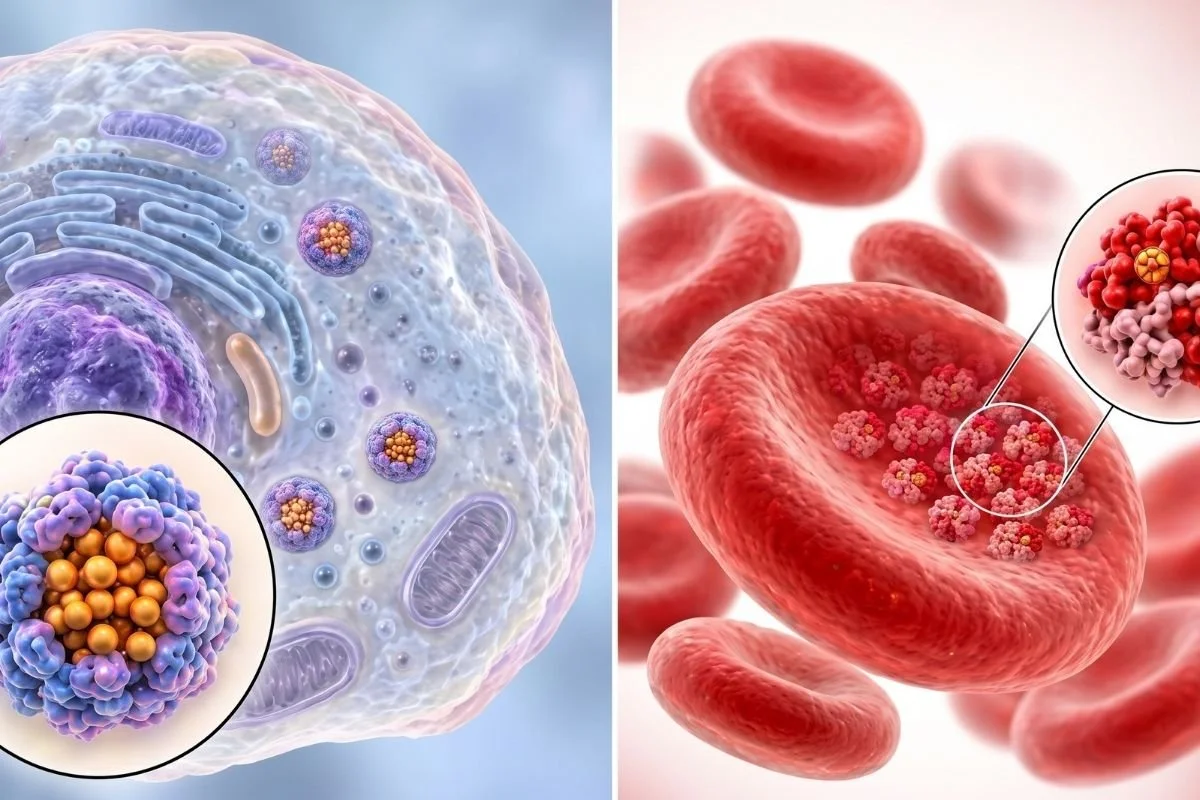
Haemoglobin vs ferritin: why “your iron is fine” might not mean fine
Haemoglobin measures the iron already in your red blood cells. Ferritin measures what you have left in storage. Only one of those tests finds iron deficiency early, and the other one is the test most women are given.

What is a normal ferritin in pregnancy?
In pregnancy, iron deficiency is diagnosed at a ferritin below 30 micrograms per litre, which is higher than the lower limit printed on most pathology reports. Here is where that number comes from, and why a result can be called normal and still be low.

Letrozole and progesterone: when they are used and why
Letrozole helps you ovulate and progesterone supports the lining of your uterus. Here is what the evidence shows for each, and when neither is the answer.

The first trimester checklist, the questions most women forget to ask
The first trimester checklist, including which screening tests Medicare covers, what a low chance NIPT result actually means and the four things worth sorting before your first appointment.
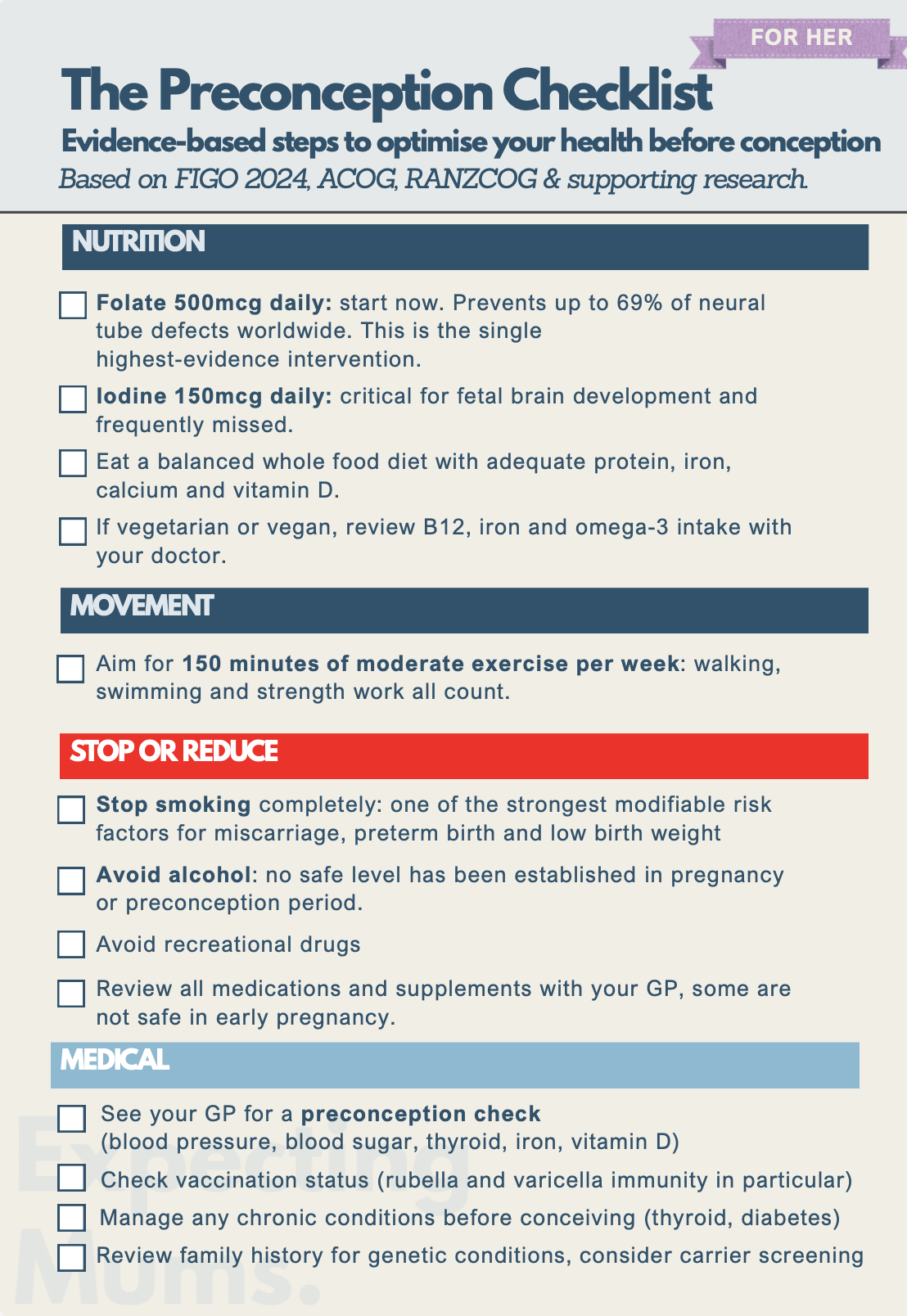
Your preconception checklist
A preconception checklist built on Australian guidelines, covering supplements, blood tests, vaccinations, carrier screening and iron stores. What to do, when to start and what to ask your GP for.
Join My Email List
Sign up for exclusive access to our weekly emails to receive bonus practical tips and evidence breakdowns based on the latest research that I come across. You'll also receive free access to all of my guides.

Hi, I’m Bella
I have a Masters of Clinical Epidemiology and a background in biomedical science, and I started Expecting Mums Australia for one reason: to build a community of women who believe research belongs in every conversation.
There is a lot of noise out there for women navigating preconception, pregnancy and postpartum. I sift through high-quality studies and current guidelines, then tell you plainly what the evidence says, what it does not and what that means for you.